
Canada’s Power & Hydro Grid Architecture Across 13 Provinces & Territories
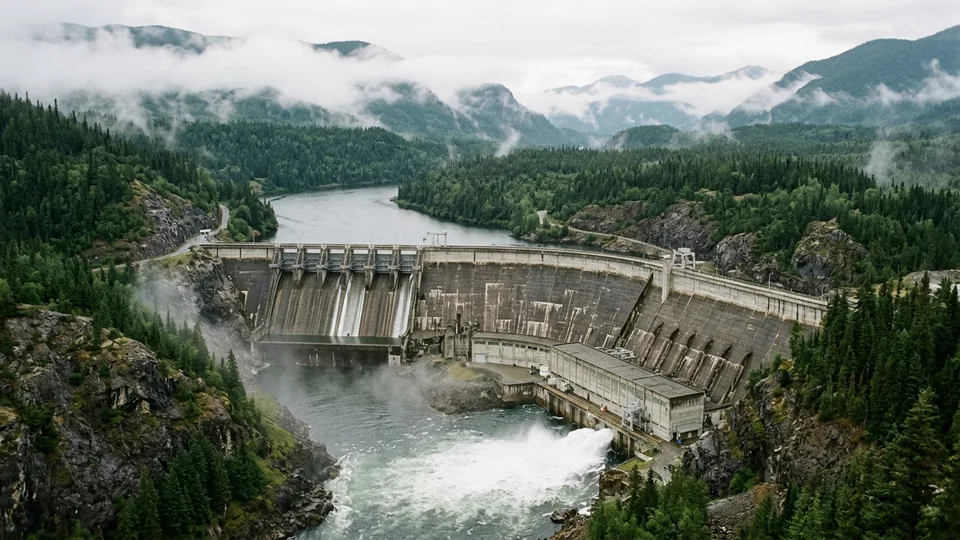
Canada operates one of the world’s largest and cleanest electrical networks, powered primarily by hydroelectricity across Quebec, British Columbia, Manitoba, Newfoundland and Labrador, and Ontario — explaining why residents throughout much of the country search for "hydro outage" interchangeably with "power outage". Technically, provincial transmission networks interlock with the North American Eastern and Western Interconnections, with one unique exception: Hydro-Québec operates asynchronously behind high-voltage direct-current (HVDC) converter ties linking Ontario, New Brunswick, and New England, a design that famously isolated Quebec from cascading external blackouts such as the 2003 Northeast failure.
Local utility oversight varies province by province: Ontario divides service between rural/transmission leader Hydro One and municipal local distribution companies (Toronto Hydro, Alectra, Hydro Ottawa, Enova Power, Elexicon, London Hydro) under the Ontario Energy Board (OEB); Quebec relies on Hydro-Québec under the Régie de l'énergie; British Columbia pairs BC Hydro with FortisBC under the BCUC; Alberta runs a competitive AESO/AUC framework served by ENMAX, EPCOR, ATCO Electric, and FortisAlberta; Manitoba Hydro and SaskPower anchor the Prairies; while Nova Scotia Power, NB Power, Saint John Energy, Maritime Electric, Newfoundland Power, and northern territorial utilities power Atlantic and Arctic communities.
Primary Outage Causes & Utility Restoration Priority Hierarchy
Canadian climate extremes drive the vast majority of sustained blackouts: freezing rain and ice accretion pulling tree branches across overhead 13.8kV–44kV distribution feeders, coastal Pacific and Atlantic gales, summer Prairie lightning storms, and extreme-cold peak heating loads. Urban networks also face underground vault cable deterioration, vehicle-pole strikes, wildlife transformer contacts, and scheduled maintenance clearances.
Following widespread storms, utility dispatchers follow strict engineering triage: crews stabilize bulk transmission towers and substations first, restore critical life-safety infrastructure (hospitals, 911 dispatch, municipal water pumping stations), repair three-phase commercial trunk feeders next, and finally work down neighbourhood lateral streets to individual residential service drops.
Public Safety Canada 72-Hour Emergency Kit & Winter Cold-Snap Rules
Public Safety Canada and the Canadian Red Cross advise households to maintain a 72-hour emergency preparedness kit ahead of storm seasons:
- Water & Perishable Food Guidelines: Store 2 litres of drinking water per person daily (4 litres if including washing/cooking) plus non-perishable rations and a manual can opener. CFIA food safety rules indicate a closed refrigerator holds safe temperatures below 4°C for roughly 4 hours, while a full freezer stays frozen up to 48 hours (24 hours half-full).
- Safe Lighting & Medical Baseline Registration: Use battery-powered LED lanterns instead of open-flame candles, keep lithium power banks charged, and register residents requiring electrically powered medical devices on your utility’s priority support registry ahead of storms.
- Generator Carbon Monoxide & Backfeed Prevention: Always place portable generators outdoors at least 6 metres (20 feet) from windows, doors, and garages with functioning battery CO alarms on every storey. Never feed power backward into a wall outlet without a CSA-approved transfer switch installed by a licensed electrician.
- Winter Pipe Protection & Downed Wire Distance: During sub-zero outages when indoor heat falls steadily below 10°C, know your main household water shut-off location to prevent burst pipes. Always stay at least 10 metres (33 feet) back from any fallen power line and dial 911 immediately.
Canadian FSA Postal-Code Tracking & Citizen Telemetry
Provincial Terminology & Coverage Across Canada: Residents in Ontario, Quebec, British Columbia, and Manitoba routinely search using "hydro outage", whereas households across Alberta, Saskatchewan, and Atlantic Canada commonly search "power outage". OutageCanada aligns both terms seamlessly across provincial utility boards, regional municipalities, and Canadian 3-character Forward Sortation Area (FSA) postal codes so every community sees accurate local grid status.
Every verified community report submitted on OutageCanada with a 3-character Canadian Forward Sortation Area (FSA — such as M5V in Toronto, H2X in Montreal, V6B in Vancouver, T2P in Calgary, or B3J in Halifax) updates live regional telemetry charts and helps residents confirm within seconds whether a disruption is limited to one dwelling or affecting an entire city sector.