
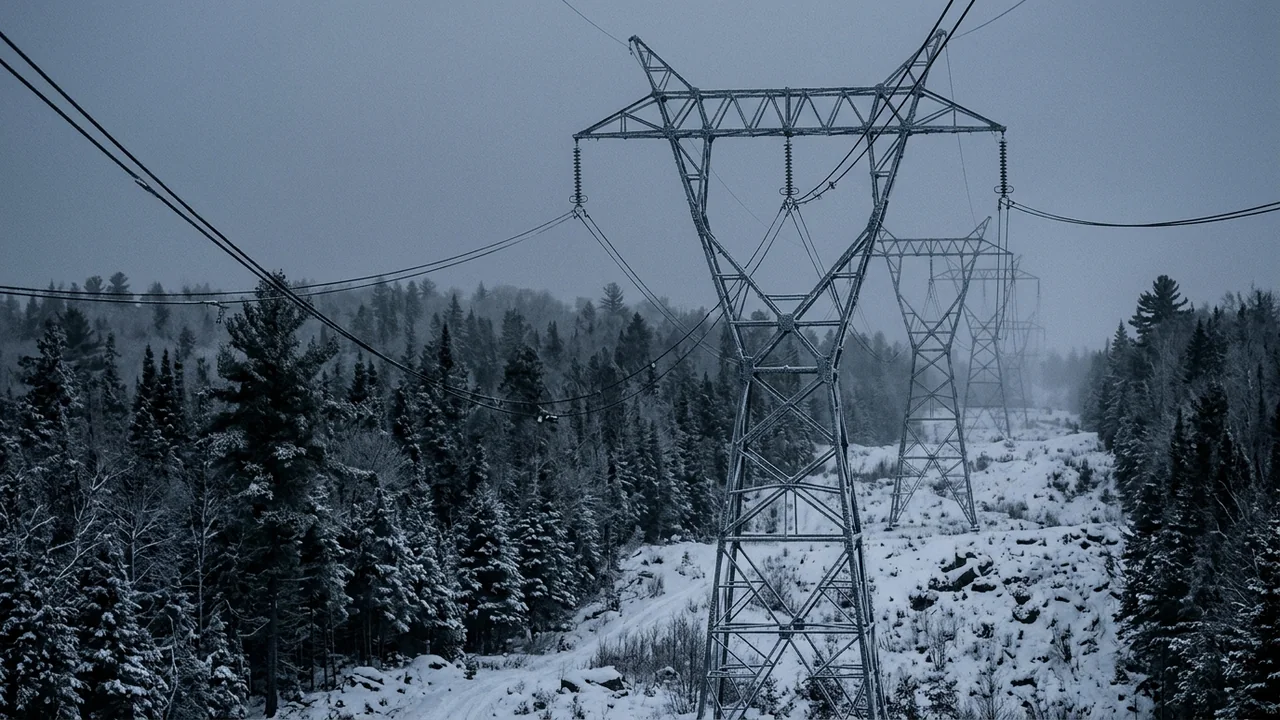
Solar Generation & Battery Backup Economics in Canadian Cold Climates
Many Canadian homeowners assume northern winter snow and short December days make rooftop solar uneconomical. In reality, high-latitude photovoltaic data from Natural Resources Canada (NRCan) confirms that southern Ontario, the Prairies, southern Quebec, and parts of the BC Interior receive stronger annual solar insolation than Germany—one of the world’s largest residential solar adopters. Southern Alberta and Saskatchewan regularly exceed 1,250 to 1,320 kWh per installed kilowatt (kW) annually thanks to crisp cold air that increases silicon cell voltage efficiency and abundant winter sunshine across clear Prairie skies.
Where Canada’s grid context shifts the financial equation dramatically is outage resilience. Severe freezing-rain ice storms in Ontario and Quebec, Pacific windstorms in British Columbia, and tropical storm remnants in Nova Scotia and New Brunswick have made backup power a priority alongside bill reduction. Pairing solar arrays with Lithium Iron Phosphate (LFP) home battery walls—typically 10 kWh to 30 kWh—bridges both priorities, slashing summer electricity bills under provincial net metering while automatically powering your gas furnace fan, sump pump, refrigerator, and fibre modem when utility feeders fail.
Crucial Canadian Safety Rule: Why Standard Grid-Tie Solar Shuts Off During Blackouts
A common shock for first-time solar owners across Canada occurs during their very first hydro outage: even under bright noon sunshine, a standard grid-tied rooftop system without an isolating battery inverter automatically shuts down instantly when utility voltage disappears. Under Canadian Electrical Code rules (CSA C22.2 No. 107.1 / IEEE 1547 anti-islanding protection), grid-tied microinverters and string inverters must disconnect within milliseconds so solar electricity cannot flow backward ("backfeed") into broken transmission wires and electrocute Hydro One, Hydro-Québec, BC Hydro, or NS Power line crews.
To keep lights and essential loads alive off-grid when utility power fails, your installation requires a hybrid backup inverter with an automatic Microgrid Interconnect Device (MID / transfer switch) coupled with a home battery bank. When the grid drops, the gateway isolates your critical-loads subpanel cleanly from street utility wires, allowing your solar panels to recharge your battery continuously each morning until hydro restoration occurs.
Provincial Net Metering, Solar Yields & Grid Realities Across Canada
| Province / Territory | Typical Annual Yield (kWh / kW DC) | Net Metering Framework | Battery Backup Value Case |
|---|---|---|---|
| Alberta & Saskatchewan | ~1,260 – 1,330 kWh/kW | Monthly retail exports + Solar Club seasonal high/low rate switching (AB) | Offsets high retail delivery/rate swings + outage security |
| Ontario (OEB Utilities) | ~1,120 – 1,180 kWh/kW | 12-month kWh rollover credits applied against delivery/commodity charges | Supports Ultra-Low Overnight arbitrage + storm outage protection |
| Manitoba & Quebec | ~1,100 – 1,200 kWh/kW | Bi-directional net metering (credits banked over 24 months in QC under Option mesurage net) | Primary motivation is multi-day ice-storm backup rather than kWh rate savings |
| British Columbia (BC Hydro) | ~1,000 – 1,120 kWh/kW (higher in Okanagan) | Self-generation credits carried toward future bills + periodic BC Hydro battery rebates | Ideal for Vancouver Island & coastal windstorm outages |
| Atlantic Canada (NS, NB, PE, NL) | ~1,020 – 1,100 kWh/kW | Provincial net-metering kWh credits against higher ~15–18¢/kWh retail tariffs | Fastest solar bill ROI combined with hurricane windstorm resilience |
How to Size a Solar Array & LFP Battery for Canadian Blackouts
- Start With Annual Electricity Consumption (kWh), Not Peak Months Alone: Review 12 consecutive monthly hydro statements (or winter heating usage if using heat pumps). In Ontario, BC, and Nova Scotia, net metering credits generated between May and September rollover onto October–March bills. Oversizing an array massively past 100% of annual household usage rarely improves payback because excess unused credits typically expire after 12–24 months depending on the utility contract.
- Separate "Critical Loads" From Whole-Home Air Conditioning or Electric Heat: A 13.5 kWh to 15 kWh LFP wall battery cannot run a 10 kW electric baseboard furnace for multiple frozen days—that load drains a 15 kWh bank in 90 minutes. Instead, Canadian electricians wire an essential loads subpanel feeding the gas/oil furnace blower (500–800 W intermittent), basement sump pump, two refrigerators/freezers, medical CPAP devices, LED lights, and broadband router (~12–16 kWh total per 24 hours).
- Account for Snow Shedding & Pitch Angles: Steep southern roofs (30°–45°) shed wet snow naturally within hours of morning sun. Low-slope roofs (under 15°) retain packed ice crusts longer across January and February, reducing winter solar recharge during back-to-back outages—factoring an 8–15% seasonal snow derate yields honest real-world production numbers.
Financing, Federal/Provincial Programs & Contractor Verification
Before signing any residential solar or battery contract in Canada, confirm whether municipal property-assessed PACE financing (CEIP in Alberta, Better Homes Ottawa, HELP in Toronto, Solar City in Halifax) or provincial efficiency incentives (Efficiency Nova Scotia, BC Hydro Home Renovation Rebate battery grants, Greener Homes Loan terms where active) apply in your postal FSA. Always verify that your installer holds current provincial electrical contractor licensing (ESA in Ontario, Technical Safety BC, CMEQ master electrician in Quebec) and provides structural snow-load engineering stamps suited to local building codes.
LFP Battery Chemistry vs Cold-Garage Installation
Lithium Iron Phosphate (LiFePO4 / LFP) batteries have rapidly become the dominant chemistry for Canadian residential backup walls thanks to their 4,000+ cycle longevity and superior thermal stability compared to older NMC cells. However, LFP cells cannot safely accept charging current below 0 °C without risking permanent lithium plating. When siting an inverter and battery bank in an unheated detached garage in Winnipeg, Edmonton, Saskatoon, or Saguenay, choose CSA-certified cabinets with integrated self-heating mats—or locate the battery bank cleanly inside a frost-free mechanical room or utility basement where ambient winter temperatures stay above 10 °C year-round.
Homeowner Insurance, Utility Interconnection & Snow Maintenance Myths
Notify your Canadian homeowner insurance underwriter before energizing rooftop solar or storage above 10 kWh, and retain your final ESA / CMEQ / municipal electrical inspection certificate on file. Contrary to popular myth, homeowners should never climb icy pitched roofs with metal rakes or scrapers to clear snow off panels—scraping tempered anti-reflective glass voids module warranties and risks severe winter falls. Once sunlight penetrates thin snow dustings, black anodized cells warm slightly and naturally slide clean down steeper angles on their own.
To dial in your exact essential-load battery reserve before requesting installer quotes, pair the output above with our Cold-Climate Watts & Battery Sizing Calculator and inspect historical utility disruption patterns across your local FSA and province.