
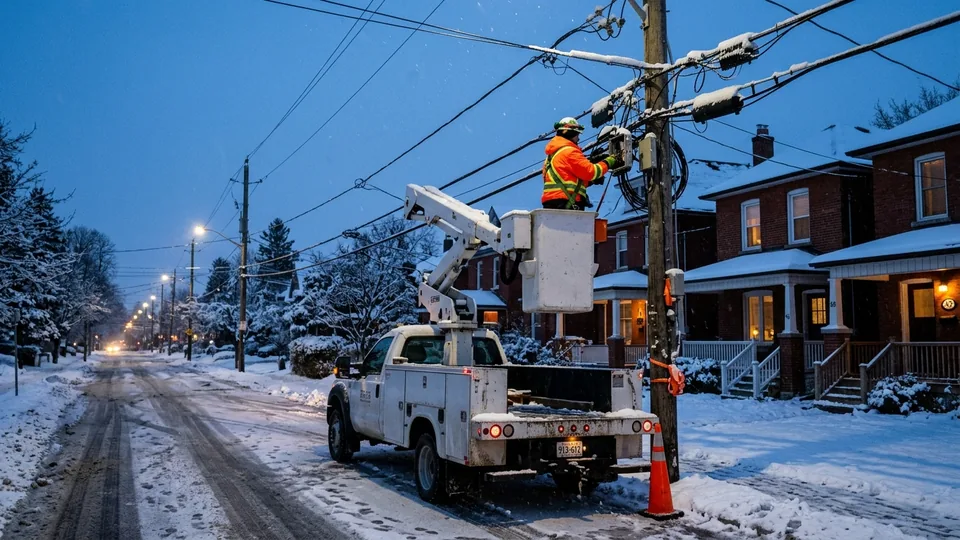
Public Mobile Wireless 5G/LTE Infrastructure & Outage Dynamics in Canada (Nationwide Canada)
Operating cellular macro-towers, urban small cells, and fibre-backhauled base stations across Nationwide Canada, Public Mobile delivers 5G/LTE mobile broadband, high-definition VoLTE voice, SMS/RCS messaging, and Alert Ready national emergency broadcasts. Right now, our telemetry monitor shows normal baseline operations across Public Mobile’s Nationwide Canada footprint, while continuously watching official feeds and localized postal-code (FSA) reports. Canada’s vast distances and winter extremes produce distinct wireless realities: rural highway corridors frequently depend on microwave backhaul vulnerable to wet heavy snow, while national operators share Radio Access Network (RAN) towers in major regions even as they operate separate core IMS voice and mobile packet gateways.
Because of this architecture, outages on Public Mobile split cleanly between local site drops and core platform failures. A localized outage hits a specific neighbourhood or rural corridor when utility power drops and a tower’s 4-to-8-hour battery bank depletes, or when road digging severs tower fibre. A core outage strikes IMS/VoLTE registration servers, eSIM databases, or roaming authentication gateways — flashing "SOS Only" across phones simultaneously across provinces. Comparing Public Mobile’s official status updates with live Canadian FSA postal-code reports reveals instantly whether disruption is local or carrier-wide.
6-Step Troubleshooting When Your Phone Shows "SOS Only" or No Service
Before borrowing another phone to reach Public Mobile at official customer support, complete these rapid diagnostic steps to restore wireless registration:
- Toggle Airplane Mode for 20 Full Seconds: Forces your handset’s modem to clear stale sector credentials and lock onto the strongest healthy adjacent Public Mobile tower.
- Enable Wi-Fi Calling in Cellular Settings: If Public Mobile towers are down locally while home fibre or cable internet stays online, turning on Wi-Fi Calling routes standard calls and SMS texts transparently through your home Wi-Fi network.
- Switch Voice & Data from 5G to LTE: During 3500/3800 MHz 5G spectrum upgrades or localized radio interference, forcing the phone onto LTE frequently stabilizes dropped voice calls and stalled web traffic immediately.
- Watch iMessage/RCS vs. Plain SMS Delays: When mobile data stalls while voice stays alive, blue iMessage or RCS chats hang silently; enable SMS fallback so urgent family messages still send over 2G/LTE control channels.
- Inspect Physical SIM / eSIM & Reboot: Restart the handset fully. A "No SIM" or "Invalid SIM" prompt warrants powering off to reseat a physical SIM card or checking Wi-Fi for carrier configuration updates.
- Leave Automatic Network Selection Enabled: Across rural Canadian territories with Extended Coverage domestic roaming agreements, automatic selection allows automatic failover to approved partner towers where authorized.
Rural Dead Zones vs. Outages & Extreme-Cold Battery Conservation
Along remote highways through the Rockies, Northern Ontario, or Atlantic coastal hills, sudden bar drops often reflect natural terrain blind spots rather than a true Public Mobile outage. During severe -20°C Canadian winter storms, smartphones hunting constantly for lost towers drain lithium batteries dramatically faster: keep phones inside warm inner coat pockets, enable Low Power Mode during prolonged blackouts, and carry a charged power bank so emergency calling capacity remains preserved.
Mandatory Canadian 911 Roaming Rule & CRTC Wireless Code Protections
Critical Safety Mandate Across Canada: Under federal CRTC rules, any powered-on cell phone flashing "SOS Only" due to a Public Mobile outage — and even devices lacking active service — automatically dials 911 across any rival Canadian carrier tower (Bell, Rogers, Telus, Vidéotron, Freedom Mobile, or SaskTel) reaching that location. Always keep your Wi-Fi Calling E911 emergency address updated inside your Public Mobile profile whenever relocating or travelling.
Consumer wireless rights in Canada are governed by the CRTC Wireless Code with free independent mediation through the CCTS. Keep timestamps of prolonged confirmed downtime, request prorated CAD credits via https://www.publicmobile.ca or official customer support using our Bill Credit Estimator, and escalate unresolved disputes free to the CCTS.
Incident Documentation, Household Continuity & Escalation with Public Mobile
Emergency Family Communication Readiness Across Canada: Establish a backup neighbourhood meeting spot ahead of storm seasons in case Public Mobile cellular towers and home internet drop simultaneously during ice storms or coastal windstorms. Download offline provincial maps onto phones beforehand, keep critical family/utility numbers written on paper inside emergency kits rather than relying solely on cloud contacts, and keep phones inside warm pockets during winter blackouts so cold does not prematurely shut down lithium batteries.
Dual-SIM & Secondary Carrier Redundancy: For mobile professionals travelling across remote Canadian provinces, keeping an inexpensive secondary prepaid eSIM on an alternate carrier network provides immediate backup data and voice connectivity during localized tower or core outages.
In-Building Concrete & Underground Signal Attenuation: Inside dense urban condo towers or underground parking levels in Toronto, Montreal, and Vancouver, weak bars often reflect structural steel/concrete shielding rather than a Public Mobile tower outage — always enable Wi-Fi Calling indoors and verify street-level signal before assuming regional service loss.
To speed dispatch triage when contacting Public Mobile at official customer support or through https://www.publicmobile.ca, always have your 3-character Canadian Forward Sortation Area (FSA) postal prefix, city/municipality name, exact failure timestamp, and neighbour status ready. Accurate postal-code telemetry helps Canadian dispatchers distinguish isolated home hardware faults from wider feeder, fibre trunk, or server cluster outages and assign the right field engineers on the first dispatch. OutageCanada continuously refreshes monitored telemetry on 15-minute cycles so residents across every Canadian province and territory stay informed in both official languages.