
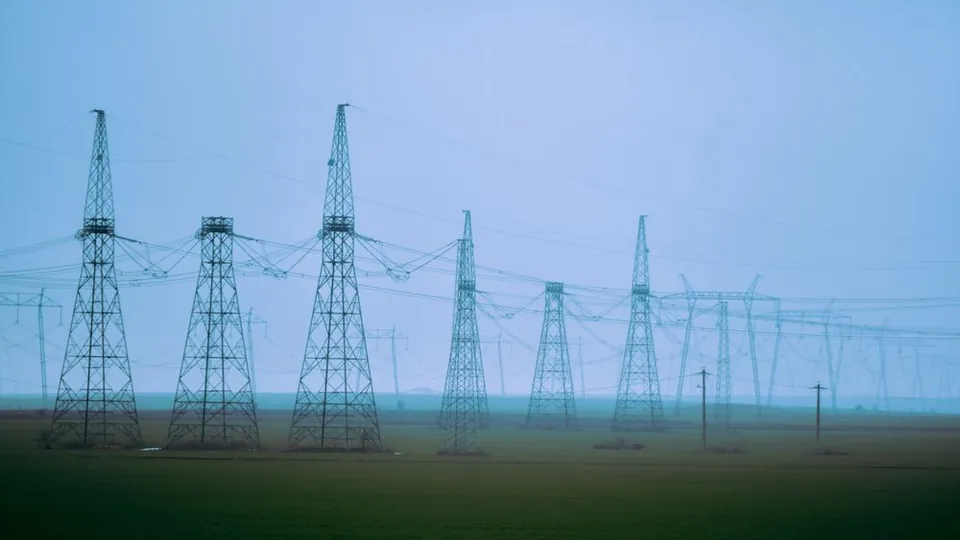
Navigating Ontario’s Fragmented Electricity Grid
Ontario is unique in Canada because electricity distribution is split between Hydro One Networks Inc.—which operates vast rural corridors, cottage country feeders, and transmission lines across northern and eastern Ontario—and more than 50 municipal Local Distribution Companies (LDCs) regulated by the Ontario Energy Board (OEB). When the lights go out, checking the wrong outage map is the single most common reason Ontario residents see "No outages reported" while sitting in the dark.
Within major cities and regional municipalities, urban customers rely on LDCs such as Toronto Hydro, Alectra Utilities (Mississauga, Brampton, Vaughan, Markham, Hamilton, St. Catharines, Barrie, Guelph), Hydro Ottawa, Elexicon Energy (Whitby, Ajax, Pickering, Belleville), Enova Power (Kitchener-Waterloo), London Hydro, ENWIN Utilities (Windsor), and GrandBridge Energy (Cambridge, Brantford). However, cross a rural boundary road just kilometres outside city limits and service immediately switches to Hydro One Storm Centre.
Comparing Hydro One vs. Municipal LDC Response Dynamics
Urban LDC networks in downtown Toronto, Mississauga, or Ottawa rely heavily on buried underground XLPE cables enclosed inside concrete duct banks and pad-mounted switchgear. Underground faults occur rarely during windstorms, though spring snowmelt flooding, salt corrosion inside vault splices, or excavation strikes require specialized cable-splicing crews to locate, isolate, and pull fresh feeder wire between manholes. By contrast, Hydro One manages over 125,000 circuit-kilometres of overhead rural wood-pole lines threading directly through Algonquin granite shield, Muskoka lakefronts, Huron snowbelt corridors, and Bruce County farm concessions where windfall and freezing rain trigger most faults.
Using Hydro One Storm Centre & Outage Maps Effectively
- Hydro One SMS & MyAccount Alerts: Register your postal FSA and Hydro One account number for proactive text alerts when smart meters on your transformer detect zero voltage.
- ETR (Estimated Time of Restoration) Updates: Early ETRs are algorithmic estimates based on historical fault types. Once a forestry or line crew physically patrols the 27.6 kV or 44 kV line, an accurate field ETR replaces the initial estimate.
- Part-Load / Single-Phase Brownouts: If half the breakers in your panel work while 240 V appliances (dryer, stove, heat pump) stop or dim lights flicker, one leg of your 240 V split-phase supply has opened at the pole transformer or overhead splice. Turn off 240 V motors immediately to prevent compressor burnout and report a "partial power" condition so dispatch routes a troubleshooter before motors seize.
- Cottage & Seasonal Property Reporting: If winter storms take down power to seasonal cottages in Kawartha Lakes, Haliburton, or Parry Sound while owners remain in Toronto or Ottawa, Hydro One smart meter dashboards display active feeder outages per township—check local status before driving up icy highway corridors.
Ontario ESA Rules: Who Repairs a Damaged Electrical Mast?
| Component | Owner & Repair Responsibility | Regulatory Inspection Required |
|---|---|---|
| Pole transformer, primary lines & drop to weatherhead | Hydro One or local LDC | Utility dispatch handles at no direct fee |
| Smart meter glass & utility seal | Hydro One or local LDC | Only utility or ESA-authorized rep may unseal |
| Weatherhead cap, riser mast conduit, meter base box | Homeowner / Property Owner | Licensed Electrical Contractor (LEC) + ESA Inspection Notification |
| Main 100A/200A interior service panel | Homeowner | Electrical Safety Authority (ESA) sign-off prior to re-energization |
If freezing rain or wind rips the meter stack from brick siding anywhere in Ontario, Hydro One and LDC line crews cannot reattach overhead triplex cables until an ECRA/ESA-licensed electrical contractor repairs the base and secures an Electrical Safety Authority (ESA) Connection Authorization. Keep your ESA notification number handy for utility dispatchers—without that authorization code logged into the LDC system, arriving line trucks will bypass your house and continue restoring neighbours.
Ontario Time-of-Use (TOU) & Ultra-Low Overnight (ULO) Post-Outage Recovery
Because most Ontario households are billed under OEB Time-of-Use (Off-Peak, Mid-Peak, On-Peak) or Ultra-Low Overnight tariffs, restarting dishwashers, electric dryers, pool heaters, and EV Level 2 chargers immediately after a daytime restoration during peak weekday hours (7–11 a.m. or 5–7 p.m. winter On-Peak; 11 a.m.–5 p.m. summer On-Peak) spikes household electricity bills while placing stress on neighbourhood transformers. Stagger high-wattage loads into Off-Peak hours after 7 p.m. whenever safe.
Frequently Asked Questions — Ontario Outages
How do I verify whether my street belongs to Hydro One or a local LDC?
Check the utility name and 24-hour outage number printed on the top-left corner of your Ontario electricity bill, or search your 3-character postal FSA directly on OutageCanada.
Are Ontario utilities required to reimburse outage losses under OEB standards?
No monetary automatic bill credits apply to weather-related distribution blackouts in Ontario, although OEB tracks annual SAIDI and SAIFI reliability metrics for every LDC.
What should I do when traffic signals go completely dark at Ontario intersections?
Under the Ontario Highway Traffic Act, any signalized intersection with completely dark or flashing red traffic lights must legally be treated as an all-way four-way stop—yield carefully before crossing.
Canadian Provincial Utility Regulators & Insurance Documentation Checklist
When a storm or equipment fault disrupts hydro electricity for more than several hours across Canada, households often navigate both utility restoration queues and homeowner insurance assessments. Unlike minor retail service disruptions, provincial electrical distribution utilities—governed by regulators such as the Ontario Energy Board (OEB), Québec’s Régie de l’énergie, the British Columbia Utilities Commission (BCUC), the Alberta Utilities Commission (AUC), the New Brunswick Energy and Utilities Board (NBEUB), and the Nova Scotia Utility and Review Board (UARB)—follow strict force majeure tariffs. Consequently, weather-driven tree contact, freezing rain, salt fog, or lightning blackouts almost never trigger automatic utility bill refunds, making personal documentation essential for residential insurance endorsements.
5 Items to Document Before Utility Power Returns
- Exact Outage Timestamps by FSA: Screenshot your utility outage ticket ID alongside the timestamped neighbourhood log on OutageCanada’s live Power & Hydro tracker so claims adjusters can confirm area-wide outage duration exceeding policy waiting periods (commonly 24 or 48 continuous hours for frozen food endorsements).
- Fridge & Deep-Freezer Contents Inventory ($ CAD): Federal food-safety guidance notes a closed refrigerator keeps perishable food below +4°C for roughly 4 hours, while a full upright or deep-chest freezer preserves safely frozen states for 24 to 48 hours without opening doors. Photograph discarded spoiled food alongside grocery receipts before cleaning bins.
- Sump Pump & Sewer Backflow Damage Photos: Document basement water accumulation cleanly and note whether extended power failure disabled an unbacked electric sump pump; check if your Canadian policy carries a distinct Overland Water & Sewer Backup endorsement cap.
- Private Contractor Invoices (Master Electrician / ESA / RBQ): If an exterior weatherhead mast bent or pulled away from structural siding during wind or falling roof ice, retain itemized contractor invoices and municipal inspection permits issued by ECRA/ESA (Ontario), CMEQ/RBQ (Québec), Technical Safety BC, or provincial safety authorities.
- Generator Sizing & Transfer Verification: Review residential emergency wattage loads carefully with our Canadian Emergency Generator Sizing Calculator and inspect local fuel-stabilizer and CSA carbon-monoxide detector battery expiry dates every October before winter storms strike.
Provincial Emergency Warming Centres & Civic Check-Ins
During sub-zero multi-day blackouts, Canadian municipalities open public warming and charging centres inside community arenas, public libraries, and municipal halls—announced via municipal 311 lines, local radio on battery receivers, and Red Cross coordination desks. Check regularly on elderly neighbours, wheelchair users, and medically vulnerable residents relying on electrically powered oxygen or dialysis supplies.
Canadian Postal FSA Verification, Time-Zone ETR Accuracy & Community Alerts
Canada encompasses six distinct civil time zones stretching from Newfoundland Standard Time (NST, UTC-3:30) and Atlantic Time across the Maritimes through Eastern Time in Québec and Ontario, Central Time in Manitoba and Saskatchewan, Mountain Time in Alberta, and Pacific Time in British Columbia and Yukon. Whenever a carrier or municipal water utility posts an Estimated Time of Restoration (ETR) across bilingual alerts, verify carefully whether timestamps are expressed in local provincial time or national Eastern Time before scheduling generator refueling cycles or work-from-home calls.
Searching OutageCanada by your three-character Canadian Postal Forward Sortation Area (FSA) (such as M5V for Downtown Toronto, H2X for Montréal, V6B for Vancouver, T2P for Calgary, or B3J for Halifax) aggregates official utility feed telemetry, Environment and Climate Change Canada (ECCC) GeoMet weather advisories, and verified local community problem reports into a single privacy-preserving view—with zero account registration required. You can submit an instant outage confirmation via Report an Outage in Canada, inspect recurring neighbourhood incidents inside the Canadian Historical Outage Archive, or enable browser notifications in two taps without ever sharing sensitive personal banking credentials or home telephone numbers.