
How Hydro-Québec’s Info-Pannes Grid Restoration Works
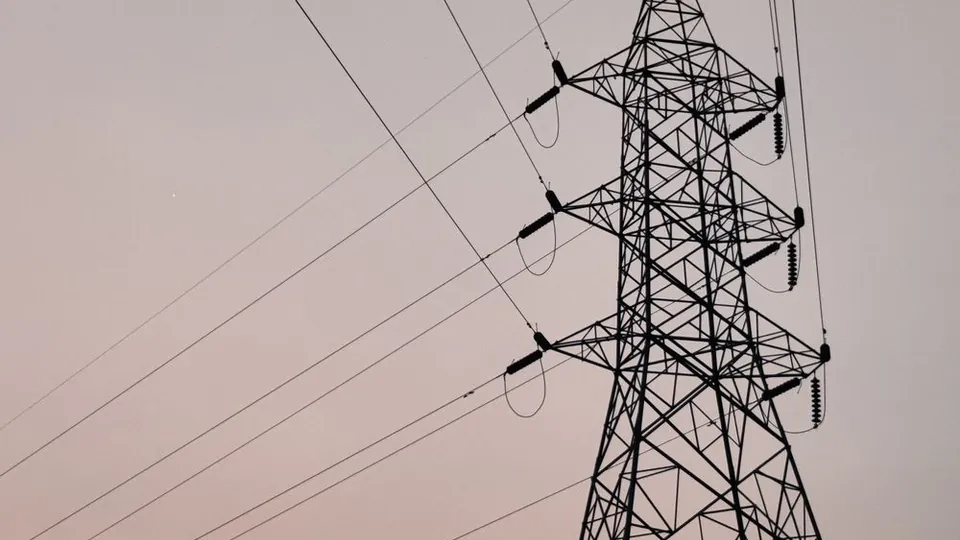
Quebec relies heavily on long-distance 735 kV high-voltage transmission corridors carrying hydroelectric power from James Bay, Churchill Falls, and the Côte-Nord down to the St. Lawrence Valley. Because winter ice accumulation (verglas) and autumn windstorms frequently bring down ice-laden branches across medium-voltage 25 kV distribution feeders, understanding how Hydro-Québec Info-Pannes sequences repairs prevents confusion when an estimated restoration time (ETR) shifts during a widespread emergency.
Every residential and commercial meter deployed under Hydro-Québec’s next-generation AMI (Advanced Metering Infrastructure) communicates grid voltage loss back to regional dispatch centres. When a fuse cutout blows or a primary conductor snaps, smart meters broadcast a "last-gasp" telemetry packet. However, individual customers must still report a dark house if their personal overhead service drop (branchement individuel) or meter base mast was ripped from the fascia by falling limbs while neighbours across the street retain lights.
Decoding Info-Pannes Outage Status Labels
- Outage Reported / Assessment Underway (Panne signalée / Analyse en cours): SCADA switches or customer calls triggered a trouble ticket, and system operators are isolating which recloser or lateral tap tripped before assigning a truck.
- Crew Assigned (Équipe assignée): A troubleshooting line crew is routed to patrol the full line section—sometimes kilometres of forested right-of-way—to pinpoint hidden tree contact before switching can occur.
- Crew on Site (Équipe sur place): Line workers are actively cutting debris, replacing blown transformer fuses, splicing conductors, or setting a new pole. Multi-pole breaks require boom trucks, digger derricks, and traffic protection.
- Power Restored — Verification Pending: Primary lines are re-energized, though isolated secondary splices or individual building masts may remain disconnected if damaged privately.
Priority Restoration Hierarchy After Major Ice Storms
During catastrophic freezing rain events such as the April 2023 Montréal–Montérégie–Outaouais glaze storm or severe Laurentides wind events, Hydro-Québec activates its Major Event Restoration Protocol. Dispatchers never repair outages strictly on a first-come, first-served basis; instead, crews restore the electrical backbone from largest impact downward:
| Restoration Tier | Grid Infrastructure | Why It Comes First |
|---|---|---|
| Tier 1 | 735 kV / 315 kV Transmission & Substations | Without substation transformers and high-voltage towers, zero power can enter an urban or rural municipality. |
| Tier 2 | Critical Public Services & Pumping Stations | Hospitals, 911 dispatch centres, municipal drinking-water treatment plants (preventing boil water advisories), and sewage lift stations. |
| Tier 3 | Three-Phase Main Distribution Feeders (25 kV) | A single main trunk switch closure often restores 1,500 to 6,000 homes along commercial arteries at once. |
| Tier 4 | Lateral Taps & Rural Branch Lines | Residential side streets, cul-de-sacs, and Laurentians/Eastern Townships lake roads serving 20–200 properties. |
| Tier 5 | Single-Home Drops & Meter Mast Repairs | Isolated low-voltage cables serving 1–4 addresses. Note: if the mast conduit pulled off your house wall, a master electrician (CMEQ) must rebuild it before Hydro-Québec reconnects. |
Electrical Mast Ownership vs. Hydro-Québec Responsibility
One of the most costly surprises during a Quebec outage involves storm damage to the vertical metal conduit rising through your roof or anchored along exterior siding. Hydro-Québec owns the overhead wire up to the splice at the weatherhead (mât de raccordement) and the smart meter itself. The homeowner owns the structural pipe, anchor brackets, weatherhead cap, and interior breaker panel. If snow sliding off a metal roof bends the mast or rips the lag bolts out of brick veneer, Hydro-Québec crews are legally barred from energizing an unsafe mast; you must retain a licensed CMEQ master electrician (maître électricien) to replace and inspect the entry before Hydro-Québec issues a reconnection order.
Cold-Load Pickup & Baseboard Heat Management in Quebec Homes
Unlike provinces heated primarily with natural gas furnaces, over 75% of Quebec households rely on 240-volt electric baseboards (plinthes électriques), central electric forced-air furnaces, or bi-energy hydronic boilers. When power returns after an eight-hour winter outage, every thermostat in an entire neighbourhood simultaneously demands 100% draw—a phenomenon utility engineers call cold-load pickup. Massive inrush currents can immediately re-trip substation overcurrent relays and extend your blackout.
- Dial down non-essential thermostats during the outage: Set basement, garage, and spare-bedroom electronic thermostats to 10°C or off before restoration begins.
- Turn off electric water heaters and EV Level 2 chargers: Flip the dedicated double-pole breakers for your hot water tank (4,500 W) and EVSE (7,200–11,500 W) until grid voltage stabilizes for at least 20 minutes after power returns.
- Beware smart thermostat settings on bi-energy Rate DT: During extreme cold snaps below -12°C/-15°C when Hydro-Québec Rate DT transitions from electricity to oil/gas backup, confirm your auxiliary furnace has battery or manual override support if the primary grid fails.
Frequently Asked Questions — Hydro-Québec Outages
Why did Info-Pannes say "Unknown / To be determined" for hours?
When dozens of trees contact multiple spans on a feeder simultaneously, dispatchers clear automated placeholders until a patrol technician physically inspects the whole circuit and confirms whether specialized crane or pole-replacement equipment is required.
Can I claim grocery spoilage or hotel costs from Hydro-Québec?
Under Quebec law and Hydro-Québec’s Conditions of Service approved by the Régie de l’énergie, utilities are not liable for food spoilage, hotel stays, or lost wages caused by weather events or external force majeure. Check your personal homeowner’s or tenant’s insurance policy, as many Quebec policies carry $500–$1,500 fridge-spoilage endorsements with waived deductibles during prolonged power losses.
Should I call 1-800-790-2424 even if my street appears on the Info-Pannes map?
If your house went dark separately from neighbours or you see sparking on the service wire, downed lines across a driveway, or a bent mast, report immediately via 1-800-790-2424 or the Info-Pannes portal and stay at least 10 metres away from any fallen conductor.
Canadian Provincial Utility Regulators & Insurance Documentation Checklist
When a storm or equipment fault disrupts hydro electricity for more than several hours across Canada, households often navigate both utility restoration queues and homeowner insurance assessments. Unlike minor retail service disruptions, provincial electrical distribution utilities—governed by regulators such as the Ontario Energy Board (OEB), Québec’s Régie de l’énergie, the British Columbia Utilities Commission (BCUC), the Alberta Utilities Commission (AUC), the New Brunswick Energy and Utilities Board (NBEUB), and the Nova Scotia Utility and Review Board (UARB)—follow strict force majeure tariffs. Consequently, weather-driven tree contact, freezing rain, salt fog, or lightning blackouts almost never trigger automatic utility bill refunds, making personal documentation essential for residential insurance endorsements.
5 Items to Document Before Utility Power Returns
- Exact Outage Timestamps by FSA: Screenshot your utility outage ticket ID alongside the timestamped neighbourhood log on OutageCanada’s live Power & Hydro tracker so claims adjusters can confirm area-wide outage duration exceeding policy waiting periods (commonly 24 or 48 continuous hours for frozen food endorsements).
- Fridge & Deep-Freezer Contents Inventory ($ CAD): Federal food-safety guidance notes a closed refrigerator keeps perishable food below +4°C for roughly 4 hours, while a full upright or deep-chest freezer preserves safely frozen states for 24 to 48 hours without opening doors. Photograph discarded spoiled food alongside grocery receipts before cleaning bins.
- Sump Pump & Sewer Backflow Damage Photos: Document basement water accumulation cleanly and note whether extended power failure disabled an unbacked electric sump pump; check if your Canadian policy carries a distinct Overland Water & Sewer Backup endorsement cap.
- Private Contractor Invoices (Master Electrician / ESA / RBQ): If an exterior weatherhead mast bent or pulled away from structural siding during wind or falling roof ice, retain itemized contractor invoices and municipal inspection permits issued by ECRA/ESA (Ontario), CMEQ/RBQ (Québec), Technical Safety BC, or provincial safety authorities.
- Generator Sizing & Transfer Verification: Review residential emergency wattage loads carefully with our Canadian Emergency Generator Sizing Calculator and inspect local fuel-stabilizer and CSA carbon-monoxide detector battery expiry dates every October before winter storms strike.
Provincial Emergency Warming Centres & Civic Check-Ins
During sub-zero multi-day blackouts, Canadian municipalities open public warming and charging centres inside community arenas, public libraries, and municipal halls—announced via municipal 311 lines, local radio on battery receivers, and Red Cross coordination desks. Check regularly on elderly neighbours, wheelchair users, and medically vulnerable residents relying on electrically powered oxygen or dialysis supplies.
Canadian Postal FSA Verification, Time-Zone ETR Accuracy & Community Alerts
Canada encompasses six distinct civil time zones stretching from Newfoundland Standard Time (NST, UTC-3:30) and Atlantic Time across the Maritimes through Eastern Time in Québec and Ontario, Central Time in Manitoba and Saskatchewan, Mountain Time in Alberta, and Pacific Time in British Columbia and Yukon. Whenever a carrier or municipal water utility posts an Estimated Time of Restoration (ETR) across bilingual alerts, verify carefully whether timestamps are expressed in local provincial time or national Eastern Time before scheduling generator refueling cycles or work-from-home calls.
Searching OutageCanada by your three-character Canadian Postal Forward Sortation Area (FSA) (such as M5V for Downtown Toronto, H2X for Montréal, V6B for Vancouver, T2P for Calgary, or B3J for Halifax) aggregates official utility feed telemetry, Environment and Climate Change Canada (ECCC) GeoMet weather advisories, and verified local community problem reports into a single privacy-preserving view—with zero account registration required. You can submit an instant outage confirmation via Report an Outage in Canada, inspect recurring neighbourhood incidents inside the Canadian Historical Outage Archive, or enable browser notifications in two taps without ever sharing sensitive personal banking credentials or home telephone numbers.