
Why Cell Service Collapses Hours After Hydro Power Fails
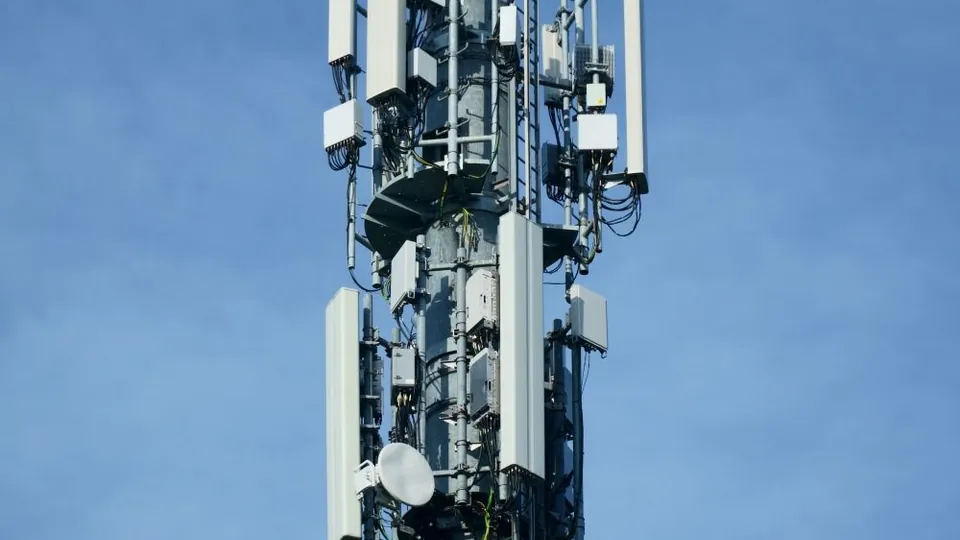
Many Canadians assume mobile networks survive endlessly during municipal blackouts because smartphones carry internal batteries. In truth, the vast majority of urban rooftop macro sites and rural steel monopoles operated by Rogers, Bell, Telus, Vidéotron, Freedom Mobile, and SaskTel run directly off commercial municipal electricity lines backed by compact battery cabinets holding roughly 4 to 8 hours of reserve capacity—even shorter during deep Canadian winter cold snaps or when storm-forced demand floods every sector channel at once.
Once neighbourhood home Wi-Fi hubs lose AC electricity, tens of thousands of nearby residents switch simultaneously onto mobile streaming, outage map reloads, and HD video calls—rapidly saturating macro radio resources while upstream fibre huts also run down battery banks. Even if one tower retains a diesel generator, an upstream regional aggregation shelter blackout can cut cellular backhaul silently, leaving signal bars visible on screen while calls drop cleanly to dead silence.
Mandatory Emergency 911 Roaming & Satellite SOS in Canada
| Scenario | What Your Smartphone Can Still Do |
|---|---|
| Your own carrier is down, rival carrier tower operates nearby | Even when screens read "SOS Only" or "No Service", dialing 911 commands your mobile baseband radio under Canadian regulatory safety rules to latch onto any functioning Bell, Rogers, Telus, Vidéotron, Eastlink, or SaskTel frequency band within radio range. |
| Total cellular outage in wilderness or post-hurricane blackouts | Compatible modern smartphones (iPhone 14+ / supported Android flagships) allow Emergency SOS text dispatch directly via low-Earth satellite links across southern and central Canada under clear open sky. |
| Home Fibre/Starlink still runs (via UPS) while local cell tower died | Wi-Fi Calling tunnels both standard voice calls and carrier SMS/2FA verification texts transparently over residential broadband straight into carrier IMS cores without needing a single local cell bar. |
How to Enable Wi-Fi Calling Before Emergencies Hit
Canadian carriers enforce strict E911 physical address validation during initial Wi-Fi Calling setup so emergency dispatchers still know your street house number and buzzer code even without cellular tower triangulation. Crucially, setup sends a verification token—if you wait until cell towers already died, activation often fails. Enable it today while healthy:
- iPhone (iOS): Open Settings → Cellular → select active Canadian eSIM/SIM → Wi-Fi Calling → toggle ON and submit exact civic address + postal code.
- Samsung / Pixel / Android: Phone App Settings or Connections → Mobile Networks → Wi-Fi Calling → Enable and complete Bell/Rogers/Telus/Vidéotron E911 address form.
- Enable Airplane Mode + Wi-Fi Inside Zero-Signal Basements: When weak 1-bar roaming drains phone battery searching endlessly for dead towers during outages, toggle Airplane Mode ON and re-enable Wi-Fi only so Wi-Fi Calling handles everything on 70% less battery draw.
SMS Resilience & Battery Preservation Tips During Blackouts
Plain SMS text messages consume minimal signalling bandwidth compared to VoLTE voice frames and frequently slip through tower congestion windows hours after voice dials fail with "Call Failed". Switch phones cleanly to Low Power Mode, dim OLED display brightness down below 20%, close social video feeds automatically fetching cellular video, and verify active tower outages across OutageCanada’s Wireless Status Directory.
Frequently Asked Questions — Canadian Wireless Outages
Does sending WhatsApp or iMessage over Starlink / home Wi-Fi count as 911?
No—OTT messaging apps cannot route location-verified calls to local 911 PSAP desks; always maintain native carrier Wi-Fi Calling (with valid E911 address) or direct cellular dialing for 911 emergencies.
Why did "Extended" or "Bell-EXT / Rogers-EXT" appear on my Canadian phone screen?
Domestic inter-carrier roaming agreements activate automatically outside home footprints—note that data may remain throttled unless extended roaming passes apply.
Canadian Wireless Emergency Resilience, Tower Power Limits & Consumer Safeguards
Cellular networks across Canada—anchored nationally by Rogers, Bell, and Telus and regionally by Vidéotron / Fizz, Freedom Mobile, SaskTel, Eastlink, and Tbaytel—operate under federal Innovation, Science and Economic Development Canada (ISED) spectrum licences and the CRTC Wireless Code. While macro base stations protect public safety channels far longer than unmanaged consumer routers, severe Canadian ice storms, coastal cyclones, and wide-area hydro outages inevitably drain backup battery cabinets at thousands of un-generatored rural and rooftop tower sites within four to eight hours.
Essential Mobile Survival & Account Security Habits Across Canada
- Protect Account Portability & 2FA Channels: Contact your carrier directly to activate port-protection locks and account-level PINs preventing unauthorized SIM-swap attacks—especially vital during heavily publicized Canadian network blackouts when fake refund phishing SMS surges bombard nervous customers.
- Verify Cellular vs. Core-Network Outages Early: Check live crowd-verified reports across Canadian 5G & Wireless Carriers; switching smartphone network settings temporarily from 5G Auto to LTE / 4G occasionally bypasses overloaded 5G standalone bands during localized tower re-tuning or hardware maintenance.
- Keep Wi-Fi Calling Registered Before Storms Strike: Confirm your E911 civic street address and apartment buzzer are saved cleanly in iOS or Android settings while cellular coverage is intact, and pair home fibre ONT/modems with a small UPS battery backup so Wi-Fi voice/SMS survives local street hydro drops.
- Carry Portable USB Power & Emergency Offline Contacts: Store an emergency contact sheet on paper alongside a 10,000–20,000 mAh power bank kept indoors above +5°C, since freezing cold slashes phone lithium chemistry efficiency during outdoor storm commutes.
- Track Bill Credits on Extended Unresolved Disruptions: Estimate fair prorated monthly wireless reimbursement in Canadian dollars using our CAD Bill Credit Calculator whenever verified regional blackouts interrupt voice and data continuously beyond 24 hours.
Canadian Postal FSA Verification, Time-Zone ETR Accuracy & Community Alerts
Canada encompasses six distinct civil time zones stretching from Newfoundland Standard Time (NST, UTC-3:30) and Atlantic Time across the Maritimes through Eastern Time in Québec and Ontario, Central Time in Manitoba and Saskatchewan, Mountain Time in Alberta, and Pacific Time in British Columbia and Yukon. Whenever a carrier or municipal water utility posts an Estimated Time of Restoration (ETR) across bilingual alerts, verify carefully whether timestamps are expressed in local provincial time or national Eastern Time before scheduling generator refueling cycles or work-from-home calls.
Searching OutageCanada by your three-character Canadian Postal Forward Sortation Area (FSA) (such as M5V for Downtown Toronto, H2X for Montréal, V6B for Vancouver, T2P for Calgary, or B3J for Halifax) aggregates official utility feed telemetry, Environment and Climate Change Canada (ECCC) GeoMet weather advisories, and verified local community problem reports into a single privacy-preserving view—with zero account registration required. You can submit an instant outage confirmation via Report an Outage in Canada, inspect recurring neighbourhood incidents inside the Canadian Historical Outage Archive, or enable browser notifications in two taps without ever sharing sensitive personal banking credentials or home telephone numbers.