
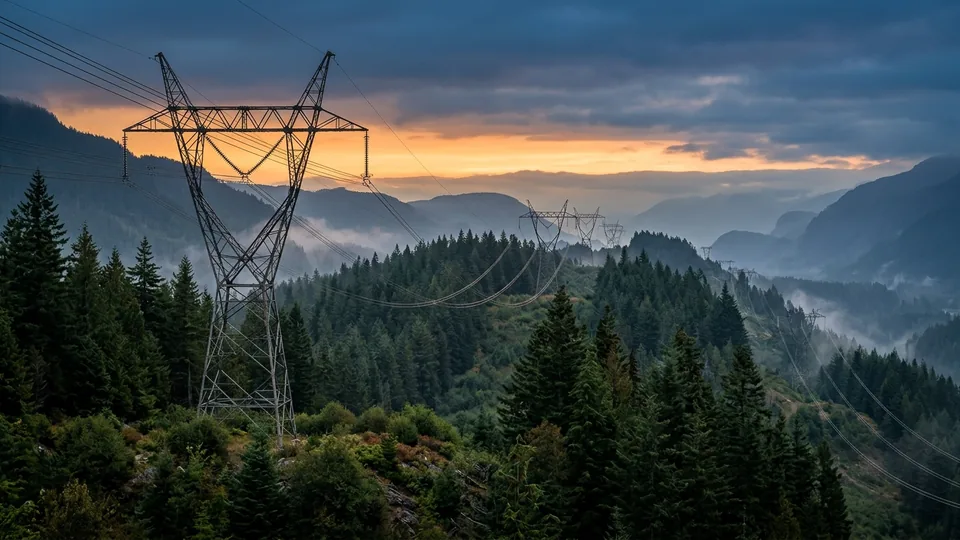
Why Summer Grid Outages Behave Differently During Canadian Wildfire Season
Most Canadians associate multi-hour electrical outages with freezing rain in Ontario and Québec or Pacific autumn windstorms in coastal British Columbia. Yet between May and October, prolonged summer heat domes, drought-cured timber, and active forest fires regularly force Canadian transmission and distribution operators—including BC Hydro, FortisBC, ATCO Electric, FortisAlberta, Hydro One, and Hydro-Québec—to operate the grid under strict wildfire-mitigation protocols.
Two distinct mechanisms explain why summer Canadian power and hydro outages often stay dark far longer during high fire-danger weather even when skies look clear above your street: non-reclose protection modes and preventive Public Safety Power Shutoffs (PSPS).
1. Non-Reclose Protection ("Single-Shot" Reclosers) Explained
Under normal winter or spring conditions, overhead distribution feeders use automated pole-top switches called reclosers. If a tree branch brushes a live 14.4 kV or 25 kV conductor, the breaker opens for a fraction of a second and automatically attempts to re-energize ("test") the line once or twice so temporary faults clear without rolling a truck.
During High or Extreme Wildfire Danger ratings—especially across BC’s Interior, Okanagan, Cariboo, Alberta’s Foothills, and Boreal Northern Ontario—utilities reprogram substation relays and line reclosers into sensitive single-shot / non-reclose mode:
- Zero automatic test re-closures: Even a brief bird strike, dry pine bough contact, or wind-slapped line opens the feeder permanently on the first cycle. Re-energizing a downed conductor into bone-dry needle litter can throw molten aluminum sparks capable of igniting an interface wildfire within seconds.
- Mandatory foot or helicopter patrol before re-energizing: Line technicians cannot press the reset button remotely from control centres in Vancouver, Calgary, Markham, or Montréal. Crews must physically inspect every span along rural Crown-land rights-of-way before restoring voltage—often adding 4 to 12 hours per circuit.
- Smoke-ionized arc flashovers: Thick wildfire smoke contains carbon particulates and ionized gases that lower the dielectric strength of high-voltage air gaps around 230 kV to 735 kV transmission insulators, forcing precautionary load shedding or circuit lockouts hundreds of kilometres downwind of active flames.
2. Preventive Wildfire Power Shutoffs vs. Emergency Evacuation De-Energization
| Scenario | Trigger Condition | Typical Notice & Duration | Regional Examples |
|---|---|---|---|
| Proactive Wildfire PSPS | Red-flag low humidity, cured fuels, and severe dry wind gusts threatening exposed wooded feeders | Advance alerts 12–48h ahead where possible; sustained dark periods until winds drop + full visual patrol completes | BC Interior valleys, Okanagan ridges, southern Alberta foothills |
| Sensitive Trip / Lockout | Any conductor fault while Fire Danger Index sits at High/Extreme and auto-reclose is disabled | Zero advance warning (instant trip); 3–18h pending manual patrol access | British Columbia, Alberta, Northern Ontario |
| Active Fire Perimeter Shutoff | Wildfire management agencies request de-energization to protect water-bombers, retardant drops, and ground firefighters | Immediate zero-notice cut; stays off until fire authorities declare corridor thermally safe and burnt poles are rebuilt | Boreal corridors across Québec, Saskatchewan, Manitoba & NWT |
3. Protecting Household Health, Smoke Filtration & Cold Food Safely
Unlike January blackouts where preserving home heat takes priority, summer wildfire shutoffs combine unhealthy Air Quality Health Index (AQHI) smoke levels with soaring indoor temperatures:
- Build battery-backed clean-air filtration: Running an AC HEPA purifier draws just
25–55 Won medium speed—meaning an ordinary1,000 Whlithium iron phosphate (LFP) portable power station can clean indoor bedroom smoke for 15–30 continuous hours quietly and without exhaust fumes. - Prioritize Priority Care & medical registries BEFORE June: Notify your provincial utility if anyone in the household relies on home oxygen concentrators, CPAP therapy, dialysis, or temperature-sensitive biologics, and maintain at least a 72-hour independent battery reserve. Check live Canadian grid maintenance & reserve advisories early when summer heat advisories hit.
- Use our sizing tools carefully: Run appliances through the Canadian Generator Sizing Calculator and Solar & Battery Backup Calculator so portable capacity covers refrigerator compressor surges plus indoor air cleaning safely.
4. Strict Generator & Spark-Arrestor Rules During Provincial Fire Bans
When fire danger reaches Extreme and provincial fire bans restrict open flames and backcountry machinery, running fuel generators demands extra caution across rural properties and cottages:
- Never run uncertified exhausts near dry brush: Ensure any gasoline or propane portable inverter generator uses an approved muffler spark arrestor placed on bare gravel, concrete, or cleared mineral soil at least 6 metres away from eaves, soffits, cedar decks, and dry tall grass—and strictly away from open bedroom windows due to lethal carbon monoxide.
- Verify CSA-compliant transfer switching: Never plug a double-ended male "suicide cord" into an outdoor dryer or welder receptacle. Under Ontario ESA, Technical Safety BC, and Québec RBQ electrical codes, home standby connections require an approved transfer switch or mechanical interlock panel so voltage cannot backfeed onto de-energized lines where patrol crews work under grounding tags.
- Keep cellular alerts & Alert Ready audible overnight: Wildfire evacuation orders arrive rapidly via Canada’s federal/provincial Alert Ready wireless public alerting system and local utility SMS gateways; keep a low-power USB battery bank reserved solely for family phones and a battery Weatheradio Canada receiver.
5. Canadian FSA & Six-Time-Zone Outage Verification Checklist
Canada spans six civil time zones from Newfoundland and Atlantic through Eastern, Central, Mountain, and Pacific time. Always confirm whether a utility restoration map displays local time or corporate Eastern timestamps before relying on a wildfire Estimated Time of Restoration (ETR).
Look up your three-character Forward Sortation Area (FSA) (for example V1Y in Kelowna, T0L in southern Alberta foothills, P7A in Thunder Bay, or G4R along Québec’s Côte-Nord) on OutageCanada, cross-check resolved incidents inside our Historical Canadian Outage Archive, or log field-verified neighbourhood dark zones via Report an Outage without any account sign-up.